Charts in one app, orders in another
Analysis, execution, journal, screeners and news live apart. Context is lost between every window.
 Axioma
Terminal & Journal
Axioma
Terminal & Journal
Pre-alpha · Windows
Charts, execution, risk discipline, a journal that knows your method and AI that learns from your own trades — one system instead of the seven to fifteen programs a trader stitches together today.
Free during pre-alpha · trading on exchange demo accounts
Why Axioma exists
Analysis, execution, journal, screeners and news live apart. Context is lost between every window.
Moving the stop, removing it, averaging down, re-entering on emotion — the costliest mistakes happen where no tool is watching.
A spreadsheet of trades cannot tell you which setups pay, when you break your rules or why.
Axioma began with the founder's own losses: moved stops, removed stops, averaging down and emotional re-entries. The product is built so that the system — not willpower — holds the line.
One system
Each part works on its own and becomes stronger together: the chart knows your method, the order knows your risk, the journal knows the market you traded in.
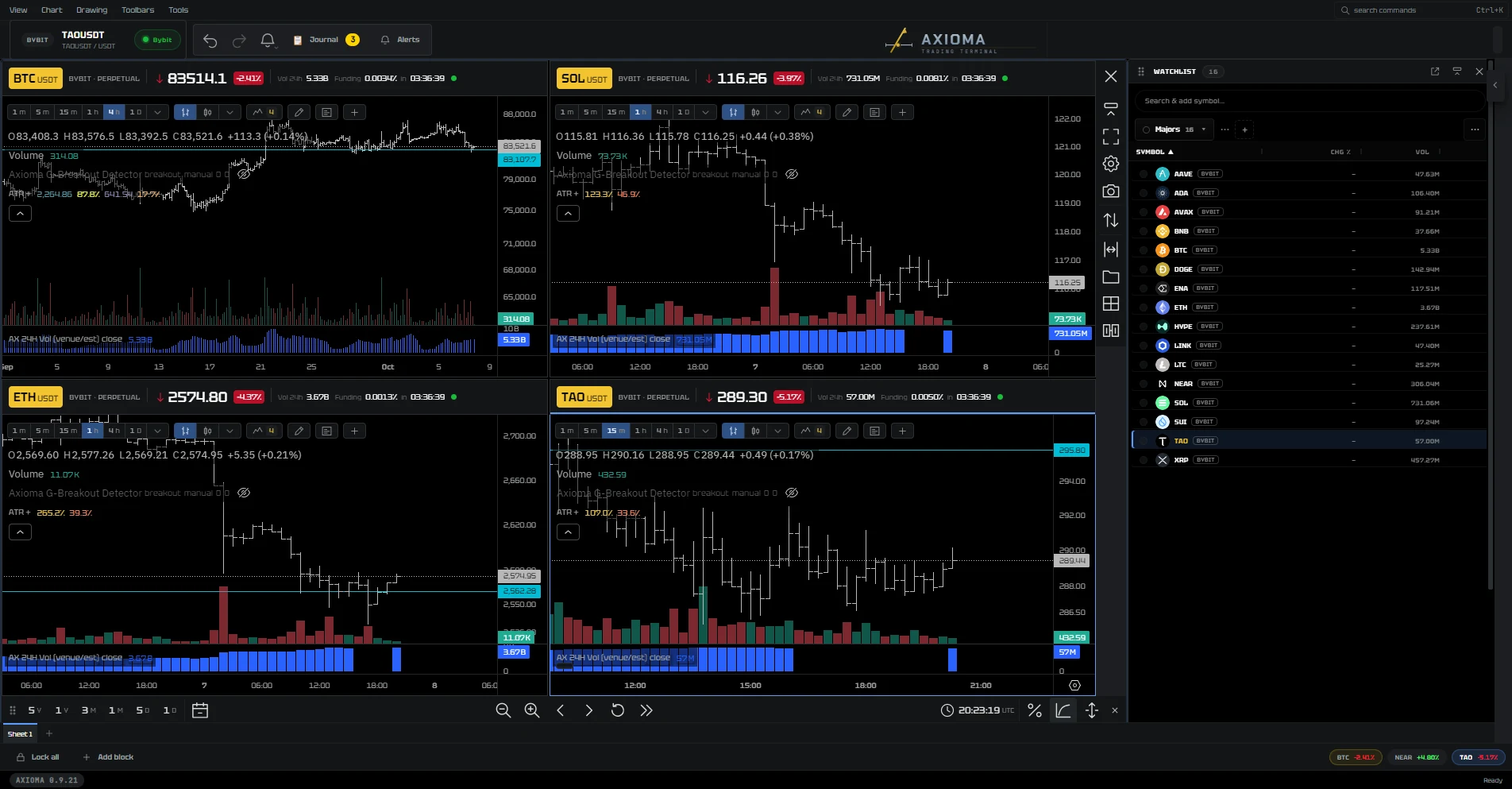
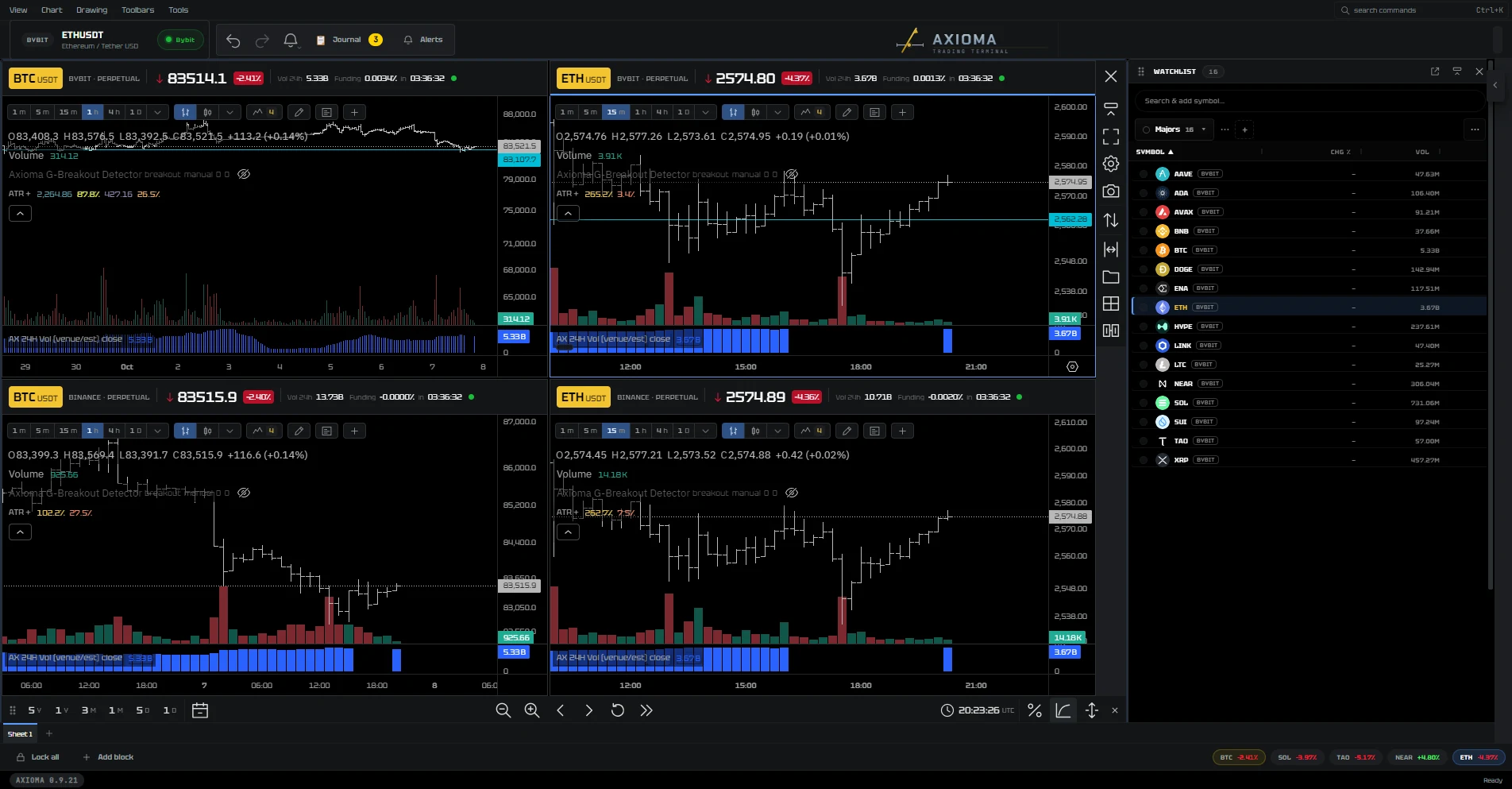
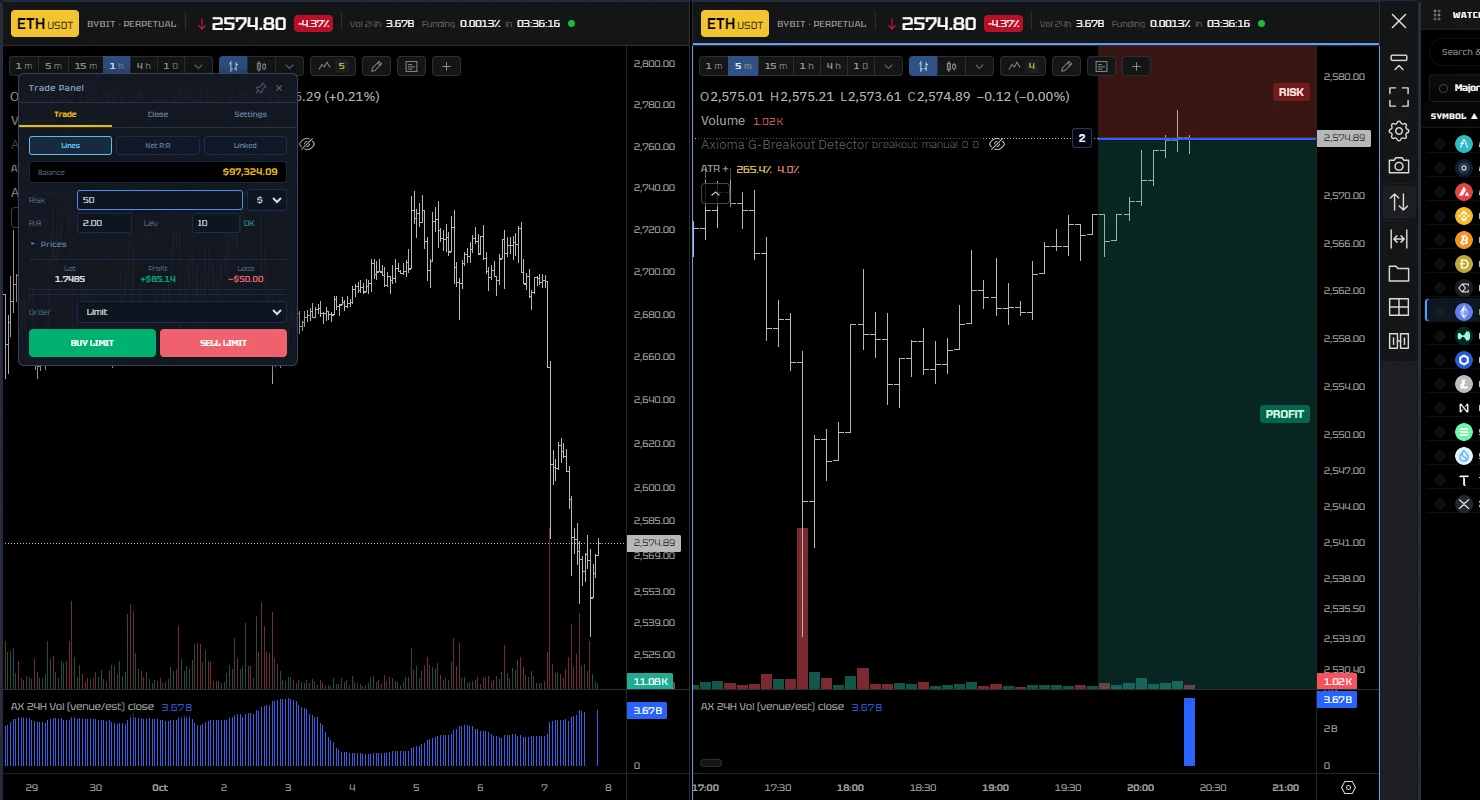
18 chart types, 42 multi-chart layouts, drawing and indicator tooling, a board of blocks and sheets across monitors.
Position size from the money you accept to lose, net reward-to-risk after fees, stop and take on the exchange, a confirmation for every money action.
Crypto perpetual futures on five venues today; spot and options are being added as separate market axes; stocks, forex and futures follow as analysis data first.
A 24-hour volume screener in the watchlist and alerts today; a two-tier screener with your own conditions, multi-timeframe filters and alerts on results next.
Tape, clusters and footprint, order book and a live liquidity heatmap — in that order, on the same chart and the same memory.
Every executed trade captured with plan, fills, fees, funding and candles before, during and after — facts sealed once the trade is closed.
Choose a method and the system unfolds for it: its levels, premises and entry rules. Level trading works today; Smart Money, volume analysis, Wyckoff and order flow are queued.
Statistics on request, your main mistake named plainly, a pre-entry check against your own history — silent when there is too little data, never placing a trade.
Voluntary daily, weekly and monthly loss limits per exchange key: when a limit is hit, no new entries and no stop moved away. Free, on principle.
Rebuild any block, header and strip the way you work; layouts and looks survive restarts; Russian and English interface.
Methodology-aware
A methodology in Axioma is four things: its level vocabulary, its premises, its rule for admitting an entry and the data it needs. One market event carries every school's name, so your journal compares like with like.
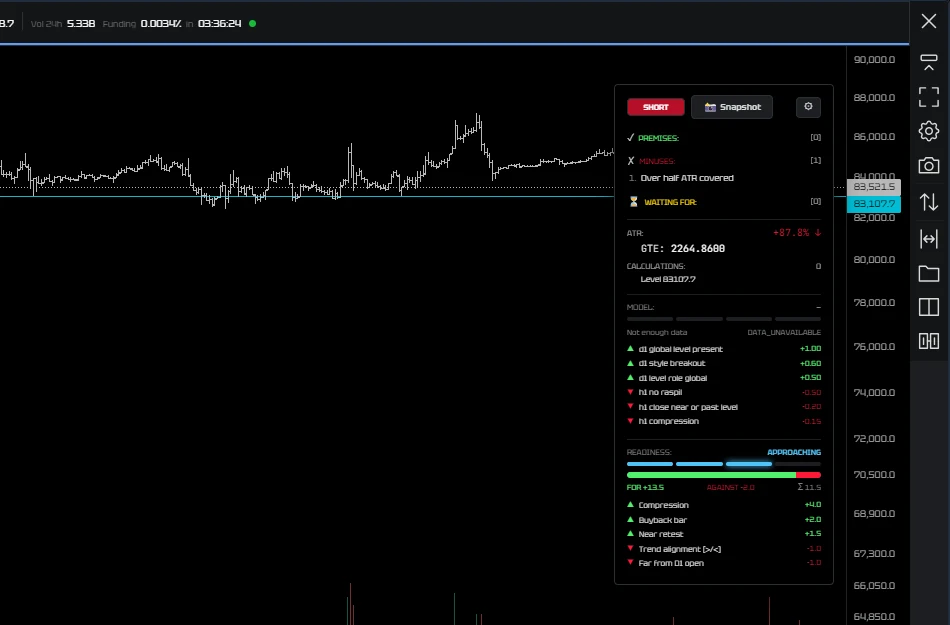
The method is chosen per instrument and frozen into each trade at entry, so analytics never mix strategies.
Memory
The terminal writes the journal for you. Over time it becomes the one thing no other tool has: an exact record of how you trade, measured against the market you traded in.
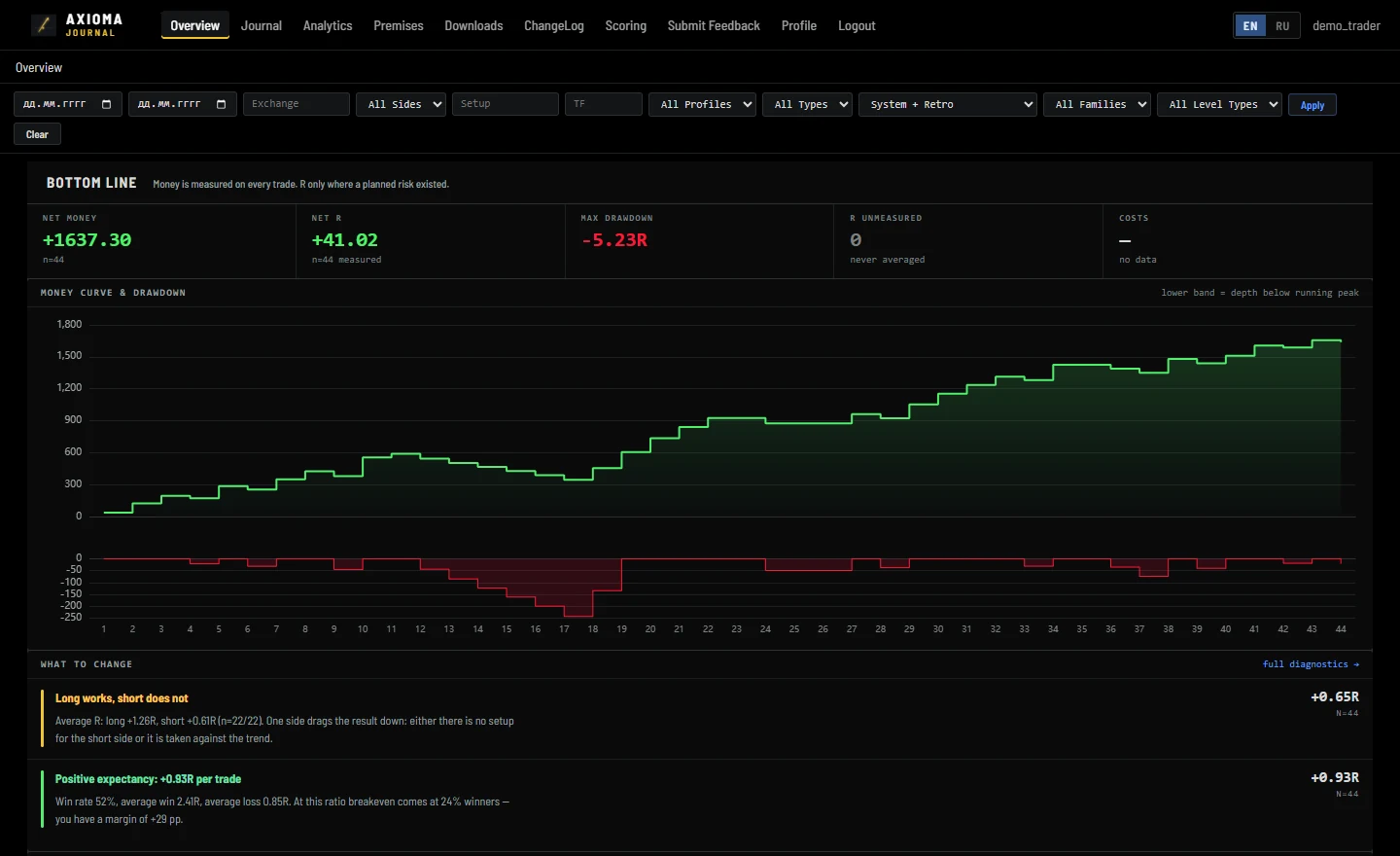
Plan, entry, stop, exits, fees, funding and the result in R and money arrive from the terminal itself.
Candles before the setup, through the trade and after it — a review a month later sees what you saw.
Closed trades cannot be rewritten; late evidence is only appended, corrections wait for exchange verification.
Expectancy, drawdown and streaks treat an unknown result as unknown, never as zero; every figure shows its sample size.
Discipline
You set what you accept to lose; the size follows from your stop.
Order, cancel, move, close — each one shows its full consequences first.
Each uses the exchange's own route; a demo order cannot reach a live account.
No server, document or model can create an exchange fact or authorise an order.
Manual trading and risk management stay free. Paid plans only make action easier.
How it is built
Axioma is designed by a team of traders and built with Claude Code and other coding agents under one shared safety layer. Agents write, test and review; the traders decide. The same discipline the product asks of traders is applied to how it is made.
A shared policy layer refuses the unrecoverable: losing uncommitted work or deleting outside the project.
Separate agents attack money paths, check the design and re-derive results before anything is called done.
Every on-screen change ships with before-and-after screenshots from the real build.
Over 600 operator decisions are recorded together with why they were taken.
Next: Claude inside the product — an analyst that reads your journal, and agents that run research and tests on our server while the trader is away from the desk.
Roadmap
Principle
Everything during pre-alpha. After it, charts, manual trading and risk management stay free on principle.
Capabilities that save time: advanced screeners, replay, order flow, the AI analyst.
Download the terminal, connect a Bybit, Binance or BingX demo account and let the journal fill itself.